Running a kitchen and bath business without a physical showroom is no longer a limitation—it has become a strategic advantage. As buyer behavior shifts toward online research, virtual planning, and remote consultations, many successful businesses are proving that growth does not depend on expensive retail space. Instead, it depends on visibility, clarity, and the ability to guide customers confidently through the design and decision-making process.
Today’s homeowners expect convenience. They want to explore ideas online, understand costs early, and visualize outcomes before committing. At the same time, cabinet dealers, designers, contractors, and eCommerce sellers are looking for scalable ways to serve more clients without rising overhead. This is where a showroom-free model becomes not only viable, but profitable.
The Industry Shift Toward Digital-First Growth
The U.S. kitchen and bath industry remains one of the strongest segments within home improvement. Remodeling activity continues to outperform many other categories, driven by aging homes, changing lifestyles, and homeowners choosing to renovate rather than relocate. Industry research consistently shows that kitchens and bathrooms are among the most renovated spaces, and project planning timelines are getting longer as buyers research more before making decisions.
This shift favors businesses that engage customers early—online—rather than relying on walk-in showroom traffic. Digital-first brands meet potential clients during the research phase, long before they are ready to visit a physical location. That early engagement builds trust and positions the business as a guide, not just a seller.

Why a Showroom Is No Longer Required for Credibility
For decades, showrooms were the primary way to establish trust. Customers needed to see products in person to feel confident. Today, trust is built differently. Clear communication, realistic visuals, transparent processes, and professional presentation matter more than physical displays.
Virtual design tools, high-quality 3D visuals, and structured consultations allow businesses to present ideas more effectively than static showroom setups. Instead of showing a few cabinet displays, companies can present a personalized layout designed specifically for the client’s space. This approach feels more relevant and often more convincing.
Operating without a showroom also removes geographic limitations. Businesses can serve clients across cities or states instead of relying on local foot traffic, opening the door to consistent, scalable growth.
Virtual Kitchen and Bath Design as a Growth Engine
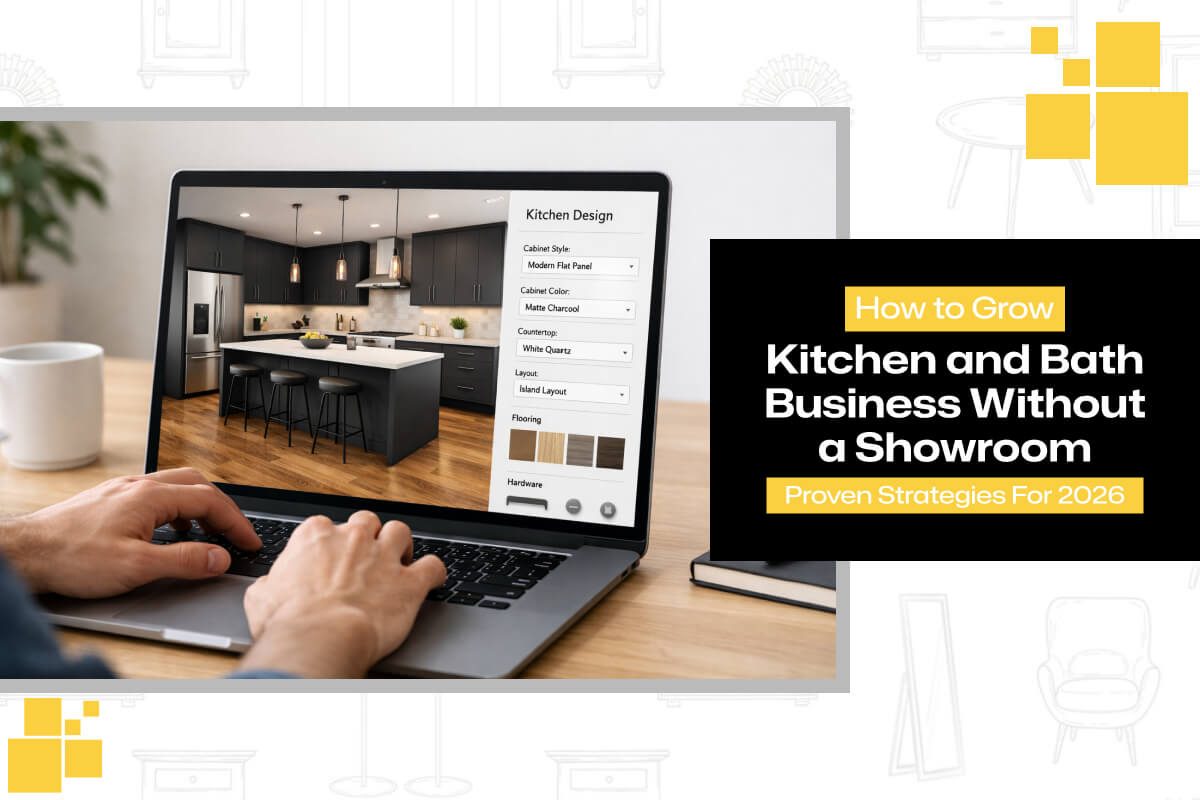
One of the most powerful tools for showroom-free growth is virtual kitchen and bath design. Digital design services allow businesses to guide clients through planning, layout, and material selection remotely while maintaining accuracy and professionalism.
Virtual design typically begins with measurements, photos, and project details shared by the client. Designers then create layouts that consider workflow, storage, and real-world installation needs. Design reviews happen through video calls or shared previews, and final deliverables include layouts, elevations, and realistic 3D visuals.
This process benefits both businesses and clients. Customers gain clarity and confidence, while businesses reduce time spent on revisions and misunderstandings. Virtual design also becomes a revenue-generating service instead of an overhead cost.
The Role of 3D Visualization in Closing More Projects
3D visualization plays a critical role in growing without a showroom. Flat drawings often leave room for interpretation, which can slow decisions or create confusion. Realistic visuals remove that uncertainty.
When clients can see how cabinets, finishes, countertops, and appliances work together in their own space, decision-making becomes faster and more confident. This is especially important for remote customers who cannot see products in person.
3D visuals also help businesses present ideas more professionally, whether during online consultations, proposal reviews, or follow-up discussions. Clear visuals reduce back-and-forth, prevent ordering mistakes, and improve overall satisfaction.
How Cabinet Dealers Grow Without Physical Displays
Cabinet dealers are increasingly moving away from large showroom footprints. Instead of investing in displays that take up space and require constant updates, many focus on digital presentation and design support.
By offering professional layouts and visual planning, dealers help customers understand cabinet configurations without needing to see every option in person. Digital catalogs, combined with personalized designs, often provide a better experience than static showroom displays.
This approach allows dealers to handle higher volumes, respond faster to leads, and operate with lower fixed costs—all while maintaining a professional image.
How Designers Build Authority Without a Studio
Independent kitchen and bath designers no longer need a physical studio to build credibility. A strong portfolio, clear process, and consistent online presence often matter more than location.
Designers who work remotely can serve clients across wider markets, manage multiple projects efficiently, and focus on planning rather than logistics. Virtual consultations and digital walkthroughs allow designers to present ideas clearly while keeping projects organized.
This model supports long-term growth without the constraints of rent, staffing, or limited local demand.
How eCommerce Sellers Convert Without a Showroom
For eCommerce sellers, the biggest challenge is building buyer confidence. Customers want reassurance that what they purchase will fit and function properly. Virtual design bridges this gap.
Offering layout assistance alongside product listings Like SBC helps customers understand what works for their space. This reduces incorrect orders, lowers return rates, and improves overall conversion. Design support also differentiates eCommerce sellers in a crowded market, turning service into a competitive advantage.
By integrating virtual planning into the sales process, online sellers create a smoother path from interest to purchase.
Contractors and Remodelers: Growing Lean and Flexible
Contractors benefit greatly from operating without a showroom. Instead of managing displays, they can focus on project execution and customer relationships.
Working with remote designers provides contractors with clear layouts and visuals that improve communication with homeowners. This reduces misalignment, speeds approvals, and helps projects move forward without delays caused by unclear plans.
A showroom-free model keeps operations lean while still delivering professional results.
Technology Makes Location Irrelevant
Modern design software, cloud sharing, and video communication have removed the need for physical proximity. Clients can review layouts, comment on designs, and approve plans from anywhere.
This allows businesses to grow nationally instead of being tied to local markets. It also makes it easier to serve niche audiences who value expertise over location.
Cost Control as a Competitive Advantage
One of the biggest benefits of operating without a showroom is cost control. Eliminating rent, utilities, display maintenance, and additional staffing reduces financial pressure.
These savings can be reinvested into marketing, technology, customer experience, or service expansion. Lower overhead also allows businesses to remain competitive during market fluctuations and pricing pressure.
Long-Term Growth Without Physical Limits
The most successful kitchen and bath businesses are not eliminating showrooms by accident—they are replacing them with smarter systems. Digital-first operations scale more easily, respond faster to leads, and adapt better to changing consumer expectations.
Over time, this approach builds stronger margins, broader reach, and more predictable growth.