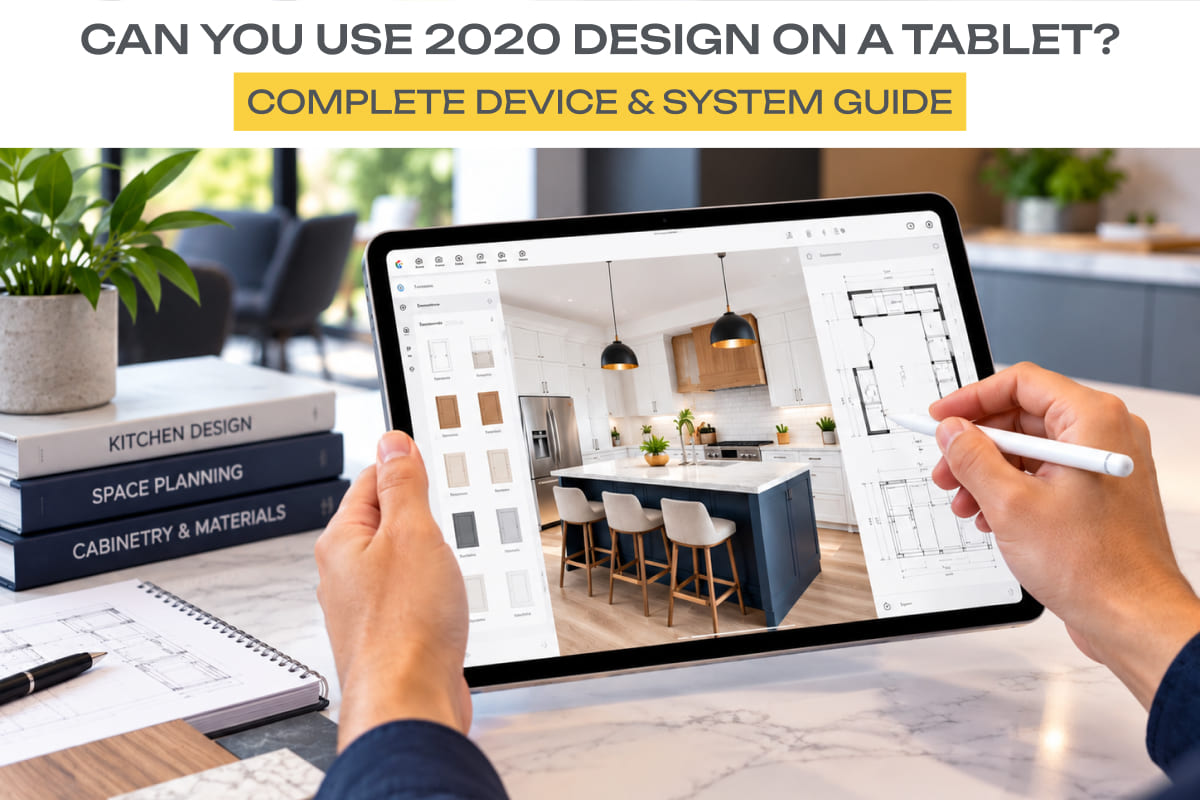
Designers and homeowners in 2026 use advanced software tools to create their kitchen designs, which they want to build. The KBDN survey shows that proper kitchen design tools are essential for achieving accurate kitchen design visualisations. Professional designers and design enthusiasts choose 2020 Design software because it provides them with accurate layout measurements, authentic 3D visualize kitchen design process. Users who want to use the software at its maximum potential need to understand the 2020 design system requirements. This guide provides insights into the best laptop for kitchen design, recommended PC specifications, and tips for optimising performance.
Understanding 2020 Design Software
Interior designers and kitchen designers use 2020 Design because it provides a comprehensive library of kitchen appliances and furniture items and building materials, which designers can use to create authentic three-dimensional visualisations. The software enables users to create layout designs while testing different materials and viewing lighting effects. The software needs design software pc requirements, which specify the design software’s needs to operate properly on computer systems. The requirements enable designers to work on both small kitchen designs and high-end renovation projects with fast rendering times and uninterrupted system performance.
The main factors to consider include processor speed, RAM, storage, graphics capabilities and display quality. The system design of powerful laptops needs specific components because system design needs those components to operate properly and maintain peak performance.
Minimum & Recommended 2020 Design System Requirements
InDesign system, here’s what designers should look at in 2020:
Minimum Requirements:
- Processor: Intel Core i5 or equivalent
- RAM: 8 GB
- Graphics: Dedicated GPU with 2 GB VRAM
- Storage: 256 GB SSD
- Operating System: Windows 11 or latest macOS version
Recommended Requirements for Smooth Performance:
- Processor: Intel Core i7 or AMD Ryzen 7
- RAM: 16 GB or more
- Graphics: Dedicated GPU with 4–6 GB VRAM, NVIDIA or AMD preferred
- Storage: 512 GB SSD or higher
- Display: Full HD or 4K for accurate design visualisation
- Operating System: Windows 11 Pro / macOS latest release
Designers use our design setup to create excellent, visually appealing kitchen design mock-ups. This design setup stimulates the use of almost all software applications in executing large-scale projects.
Choosing the Best Laptop for Kitchen Design
The selection process for the best laptop for kitchen design requires both performance and reliability testing of different options. Designers need portable machines that can handle intensive rendering tasks and run multiple applications simultaneously, and work with complex 3D models.
High-Performance CPU
To operate the 2020 design System Requirements, the device needs an excellent processor which includes either Intel Core i7 or i9 or AMD Ryzen 7 or 9, because these processors will execute all tasks without any operational failures.
Ample RAM
The system requires 16 GB of RAM, but 32 GB of RAM becomes necessary for handling large projects. The system needs sufficient memory capacity to run multiple design layers and applications at the same time without any performance delays.
Dedicated Graphics Card
The designers use NVIDIA RTX and AMD Radeon GPUs to accelerate rendering processes while the GPUs improve 3D visualisations, which enables designers to create and visualise kitchen designs that display realistic details.
Storage
SSDs can have a positive influence on workflow dependability by cutting down on loading time and enabling the almost instantaneous loading of large project files for modification.
Display Quality
One must use accurate kitchen design software specs.
depiction of color in kitchen design software to achieve high-quality, realistic previews.
Portability & Battery Life
Lightweight laptops with extended battery life provide workers with flexible work options while helping designers during their client presentations and site visits. The KBDN survey 2026 recommends high-performance laptops which deliver speed, graphics power and durability for use in professional design work.
Kitchen Design Software Specs: Beyond Hardware
The smooth performance of kitchen design software specs depends on both required hardware components and the specific software requirements. The latest 2020 Design version provides users with access to new features which work better with modern systems than older versions. Users can decrease lag through graphics settings adjustments while maintaining visual quality; system performance improves through controlled loading of necessary plugins and libraries management, which reduces RAM and CPU usage. Efficient backup and storage methods, which include external SSDs and cloud backup and storage solutions, help you avoid workflow disruptions caused by massive project files. The 2020 design system requirements can be met through software optimization to enable mid-range laptops to display and visualise kitchen designs and execute complex projects.
High-Performance Laptop Recommendations
The survey comprises various high-performance design laptops capable of meeting the design requirements for 2020. This is onset to help designers find their ideal design laptop.
- Workstation Laptops: The Lenovo ThinkPad P1 and Dell Precision series models deliver workstation-grade graphics processing units, which operate in conjunction with their high-performance central processing units.
- Creative Laptops: The Apple MacBook Pro 16-inch and Microsoft Surface Laptop Studio both provide outstanding display performance with their ability to show visual content without interruptions.
- Gaming Laptops: The devices constituting the ASUS ROG or MSI Creator series, in that they are aimed at gamers, have the appropriate GPU and cooling systems while running 3D design software.
When you invest in a laptop which meets all recommended system requirements, this investment will enable your kitchen projects to be completely visualised, edited and rendered without experiencing any performance problems.
Optimising Your System for 2020 Design
The most powerful laptops need an appropriate setup to meet the 2020 design system requirements and achieve optimal performance. The system requires continuous driver updates because GPU and system drivers need to stay current in order to avoid crashes and maintain system stability while performance mode enables demanding tasks to run faster on compatible laptops. The process of closing unneeded background applications results in increased RAM and CPU availability, which helps to enhance system performance during challenging tasks.
System efficiency improves through regular maintenance activities, which include cache clearing and storage verification, and HDD drive defragmentation. By following these optimisation practices, designers can fully leverage their hardware to visualise kitchen design in great detail, render projects quickly, and meet the demanding requirements of modern kitchen design software specs.
Future-Proofing Your Design Setup
The process of kitchen design software development needs to follow system requirements because both kitchen design and kitchen design software are undergoing continuous improvement. The purchase of advanced hardware that meets current system requirements will result in cost savings for future expenses while enabling the organization to manage software upgrades, bigger projects and new design tools. high-performance laptops for Designers with expandable RAM and scalable storage, and GPUs that support next-generation rendering engines.
Conclusion
The 2026 KBDN survey demonstrates that proper system selection is required to achieve professional outcomes in kitchen design. The 2020 design system requirements need to be fulfilled to establish operational efficiency, precise rendering and effective workflow. Designers can achieve complete software functionality through their selection of high-end CPU, best laptop for kitchen design dedicated GPUs, and sufficient RAM, and high-quality displays for kitchen design work. Designers create kitchen designs through system setting optimization and hardware future-proofing, which enables them to achieve uninterrupted design work while they implement current home design trends.
Professionals and enthusiasts can confidently create, edit and visualise kitchen design through the right tools and specifications, which make the design process faster, more accurate, and more enjoyable.