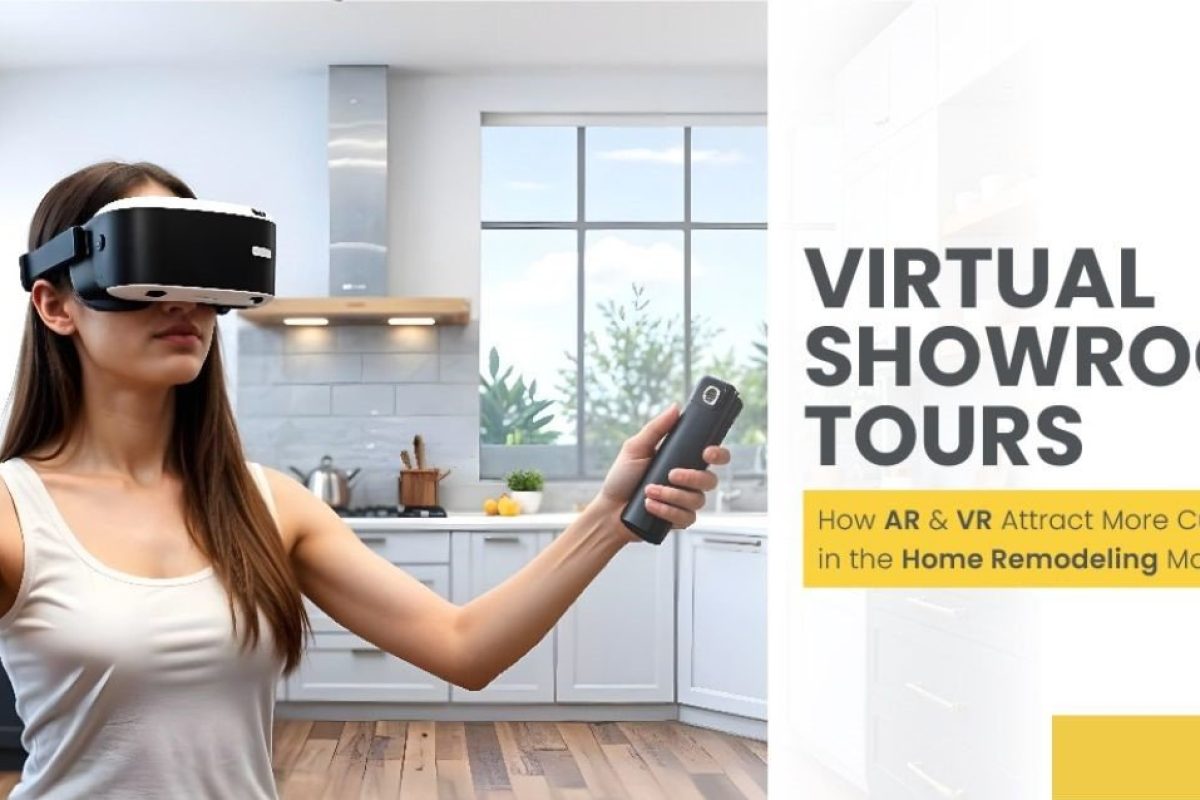
As technology continues to reshape how consumers shop and engage with brands, the remodeling industry is also seeing a wave of digital transformation. One of the most exciting advancements in this space is the rise of virtual showroom tours, powered by Augmented Reality (AR) and Virtual Reality (VR). For showroom owners and businesses in the remodeling market, these technologies offer unique ways to engage customers, provide immersive experiences, and ultimately drive more sales. Virtual showrooms reduce operational costs, streamline customer service, and help showroom owners reach a broader audience.
The Virtual Revolution: What AR and VR Bring to the Remodeling Market
AR and VR are revolutionizing the remodeling industry by bridging the gap between online and in-store experiences. These tools enable customers to explore virtual showrooms and see how various Kitchen remodeling options would look in their own spaces—all without leaving their homes. Here’s how each technology brings a distinct advantage:
Augmented Reality (AR): Allows users to superimpose products onto real-life spaces, which is particularly useful for seeing how a new kitchen cabinet or countertop would look in a current setup.
Virtual Reality (VR): Offers a completely immersive experience where users can walk through a digital representation of a showroom, seeing every angle of the products displayed.
According to Statista, the global AR and VR market in retail and e-commerce is projected to reach $12 billion by 2025. With more than 71% of consumers saying they would shop more often if they had access to AR, the remodeling market has a significant opportunity to tap into this trend to attract and retain customers.
How Virtual Showrooms Benefit Remodeling Showroom Owners
Expanded Customer Reach
By hosting a virtual showroom, businesses are no longer limited by geography. Prospective clients can experience your showroom from anywhere, increasing your potential customer base.
Cost and Time Savings
Traditional showrooms involve substantial costs, including rent, maintenance, and staff salaries. Virtual showrooms can reduce these expenses by allowing showroom owners to display a broad range of products digitally, minimizing the need for large physical spaces.
Additionally, VR and AR cut down on time-consuming customer interactions by allowing customers to get a fully immersive experience without needing an in-person guide.
Enhanced Customer Engagement with Real-Time Customization
One of the primary benefits of a virtual showroom is the ability to offer real-time customization. Customers can choose different colors, textures, and materials to see how they’ll look in their space, helping them make more confident decisions. This reduces indecision and shortens the sales cycle.
Higher Conversion Rates and Sales
Virtual showroom tours make for an engaging experience, capturing customer interest and increasing the likelihood of conversion. Research shows that customers who engage with AR and VR experiences are 40% more likely to make a purchase than those who don’t.
Insightful Data Collection
Virtual tools allow showroom owners to gather invaluable data on customer preferences, behaviors, and product interactions. These insights help showroom owners improve inventory choices, adjust marketing strategies, and streamline their customer relationship management (CRM).
Competitive Edge and Brand Loyalty
In a market where competition is high, offering a virtual showroom differentiates your brand. It positions you as a forward-thinking, customer-centric business, helping you attract new customers and retain existing ones.
Key Statistics on AR and VR in the Remodeling Market
Increased Customer Engagement: According to Deloitte, 63% of consumers say they prefer brands offering AR experiences.
Boosted Conversion Rates: Brands using AR have reported up to a 40% increase in conversion rates.
Global Reach: By 2027, the global AR and VR market is expected to exceed $114 billion, with a significant portion stemming from the retail and remodeling sectors.
Conclusion
In the remodeling market, virtual showroom tours powered by AR and VR are more than just a novelty—they’re a strategic advantage. With lower operational costs, increased customer engagement, and real-time customization, virtual showrooms provide an immersive shopping experience that attracts more customers and boosts conversions. As the industry continues its journey into the digital age, AR and VR will become essential tools for showroom owners seeking to expand their reach, reduce costs, and increase efficiency. For businesses in the remodeling industry, embracing this digital transformation is key to staying competitive and meeting the evolving expectations of modern consumers.
By adopting virtual showroom tours, remodeling showrooms can offer their customers the perfect blend of convenience, personalization, and immersive experience, shaping the future of the remodeling market in 2025 and beyond. Let’s connect today!