In the fast-evolving world of interior design, Artificial Intelligence (AI) is becoming a powerful force, and the kitchen is no exception. The rise of virtual planning tools and intelligent design systems is pushing innovation forward, especially in the tools professional designers use. One standout is 2020 Design—a software platform that continues to adapt to technological changes, including the integration of AI. This blog explores how AI is reshaping kitchen design in 2025 and how 2020 Design is evolving to meet these new demands.
What Is AI in Kitchen Design?
AI in kitchen design refers to machine learning and smart algorithms being used to improve the planning, layout, and visualization of kitchen spaces. From layout automation to intelligent product recommendations, AI helps designers save time, reduce errors, and deliver highly personalized results to clients. These innovations benefit not only the design professionals but also the homeowners who expect faster, more accurate services.
Why AI Matters More Than Ever in 2025
Today’s clients expect precision, speed, and flexibility. Kitchen design is no longer about just picking cabinets and countertops—it involves data-backed layout suggestions, style compatibility, workflow optimization, and photorealistic previews.
AI tools empower:
- Faster turnaround times with automated layout suggestions.
- Better personalization based on user preferences and historical data.
- Reduced human error through smart alerts or conflict detection.
- Improved collaboration between designers and clients with real-time updates.
How 2020 Design Software Is Adapting to AI
2020 Design has long been a leading name in the kitchen and bath design software space. Known for its robust 3D visualization and catalog integrations, the platform is continuously evolving. As we move deeper into 2025, 2020 Design has embraced several AI-driven enhancements to support kitchen designers:
1. Smart Layout Suggestions
AI now plays a major role in suggesting optimized kitchen layouts based on user preferences, room dimensions, and appliance placement. Designers receive multiple intelligent layout proposals that comply with design best practices and ergonomic standards.
2. Predictive Product Placement
Using design history and catalog data, 2020 Design can now suggest cabinets, hardware, and fixtures that match the user’s style or past choices. For example, if a user prefers shaker-style cabinets, the software may recommend compatible handles or complementary color schemes automatically.
3. Error Detection and Design Validation
AI helps validate plans before finalizing them. It flags potential issues like:
- Cabinets that interfere with door swing
- Missing appliances
- Incorrect measurements or clashing components
These alerts allow designers to make corrections early in the process, reducing costly revisions.
4. Time-Saving Automation
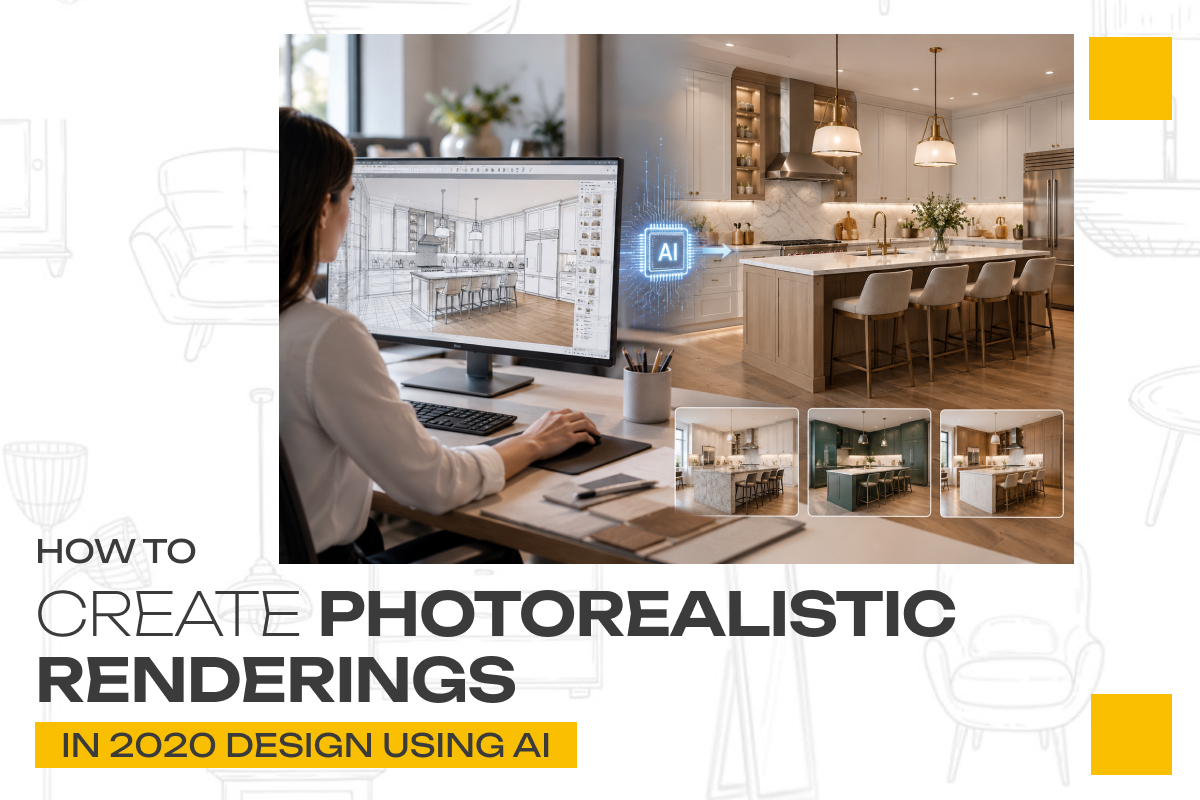
From automatically labeling dimensions to generating room elevations and rendering perspectives, AI reduces manual workloads. This allows designers to focus more on client interactions and final touches rather than repetitive tasks.
5. Virtual Client Collaboration
AI-powered tools allow clients to interact with 3D renderings and suggest edits in real time. The integration of cloud-based sharing lets changes be applied instantly, improving the design feedback loop.
AI Enhancements Compared to Traditional Design Workflows
This comparison shows how AI isn’t just a fancy feature—it directly impacts workflow efficiency and client satisfaction.
Impact on Interior Designers and Remodelers
Professionals using 2020 Design in 2025 are gaining a competitive advantage thanks to AI.
- Solo designers can deliver high-quality results faster with fewer resources.
- Remodeling companies can scale projects efficiently by standardizing AI-powered workflows.
- Design-build firms benefit from streamlined communication between in-house teams and clients.
AI makes the design process more accessible, accurate, and scalable—perfect for a market demanding speed and customization.
Real-World Example: Using AI in a Small Kitchen Redesign
A homeowner in Brooklyn wanted to redesign their 120 sq. ft. galley kitchen. Using 2020 Design:
- The designer input room dimensions and constraints.
- AI generated three optimized layout options in seconds.
- The homeowner selected one, and AI suggested color palettes and compatible appliances.
- The designer tweaked the plan and presented a 360° render.
- The project moved to the build phase within 48 hours.
This speed and precision would not have been possible with a manual workflow.
Where 2020 Design Is Headed with AI
2020 Technologies is continuing to invest in AI and machine learning to improve:
- Voice-command integrations
- Predictive pricing models
- Integration with AR/VR design walkthroughs
- Data sharing across platforms (for CRM + project management)
Expect even more real-time, intuitive design features in upcoming versions.
Connecting with the Original Blog for Deeper Insight

To understand the broader software evolution, read our detailed breakdown here: 2020 Design Software in 2025. It covers how the platform has changed over the years and why it remains a top choice for kitchen designers.
Final Thoughts: AI Is an Upgrade, Not a Replacement
AI isn’t here to take over kitchen designers’ jobs—it’s here to make their work easier and more efficient. By automating routine tasks and offering smarter tools, 2020 Design with AI gives professionals the ability to focus on what truly matters: creativity, functionality, and client satisfaction.
As 2025 unfolds, those who adopt AI-driven tools like 2020 Design will find themselves better positioned to meet client demands, stay competitive, and finish projects faster—without sacrificing quality.