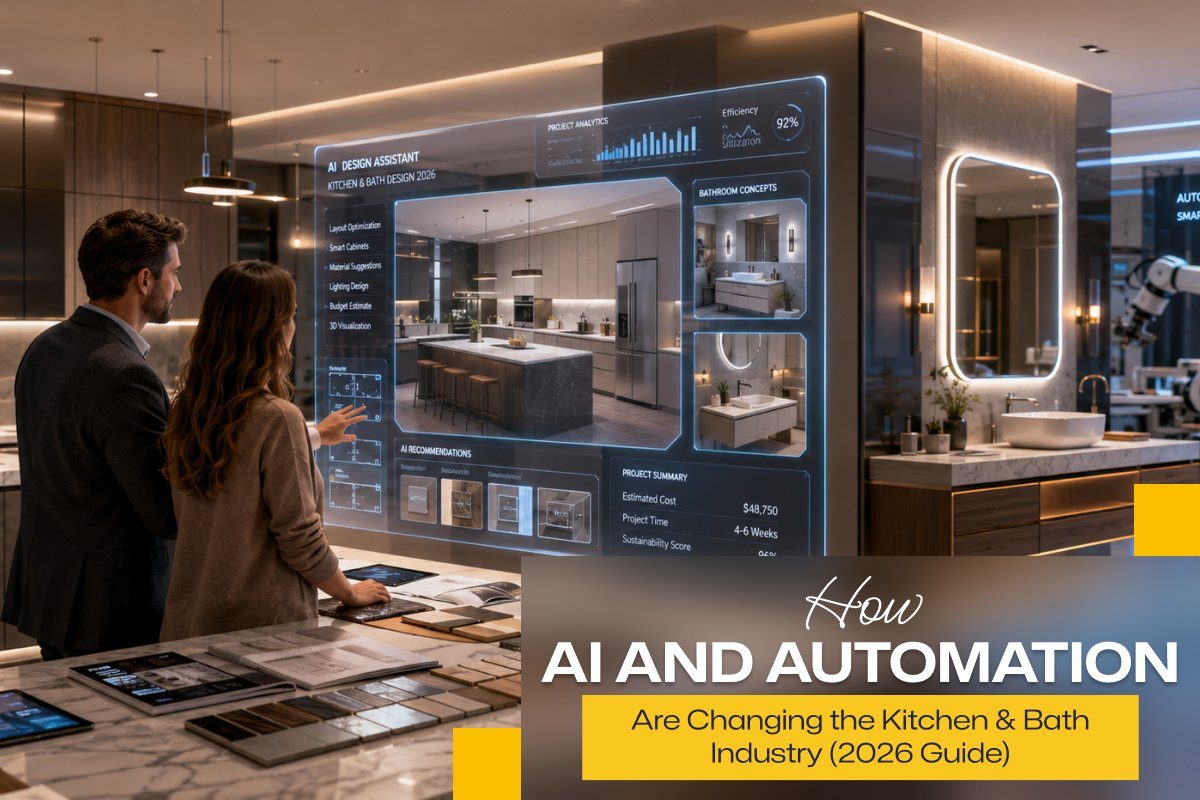
Things in the kitchen and bath industries are advancing quickly due to the influence of modern technology, which is almost redefining the way designers, remodelers, and manufacturers operate in their day-to-day activities. Currently, the AI kitchen design industry is helping businesses achieve greater efficiency, reduce manual processes, and complete projects faster. Additionally, there are homeowner expectations that are increasing as they look for realistic images, personalization, and faster results, which is encouraging automation in remodeling and intelligent design systems.
AI in kitchen design software tools that are steadily increasing productivity and making workflows easier than ever, which is redefining how kitchens and bathrooms are designed and remodeled in the modern industry.
The Rise of AI in the Kitchen & Bath Industry
Artificial intelligence is no longer just something tech companies hold onto. It has kind of slipped into interior design too, along with remodeling and home planning workflows, as it belongs there. These days, modern software platforms use AI for all sorts of mundane tasks; they can automate the repetitive parts, optimize the layouts, and generally lift project accuracy.
According to a recent industry report, the global AI interior design market was valued at around $3.2 billion in 2025, and it is expected to keep growing at a strong pace, all the way through 2033. (Grand View Research)
Another report says that around 47% of interior design businesses have already picked up some kind of AI automation in their day to day workflows. (AI Business OS)
This fast expansion shows, kind of how AI driven systems are now becoming almost essential for modern kitchen and bath businesses.
How AI is Improving Kitchen Design Software
One of the biggest shifts in the industry is AI in kitchen design software, and honestly, it feels like everything is kinda speeding up. In the past, the whole design routine meant hours of manual work, like drafting by hand, doing layout planning, and then the rendering part too. Now, AI driven platforms can take on a lot of those steps in just minutes.
Modern systems can:
- Provide automatic layout suggestions
- Provide recommendations for placing cabinets
- Enhance storage and workflow efficiency
- Create realistic 3D images
- Identify users’ design preferences
This helps designers spend less time on the same repetitive technical labor and more time on creativity and with client interaction, too.
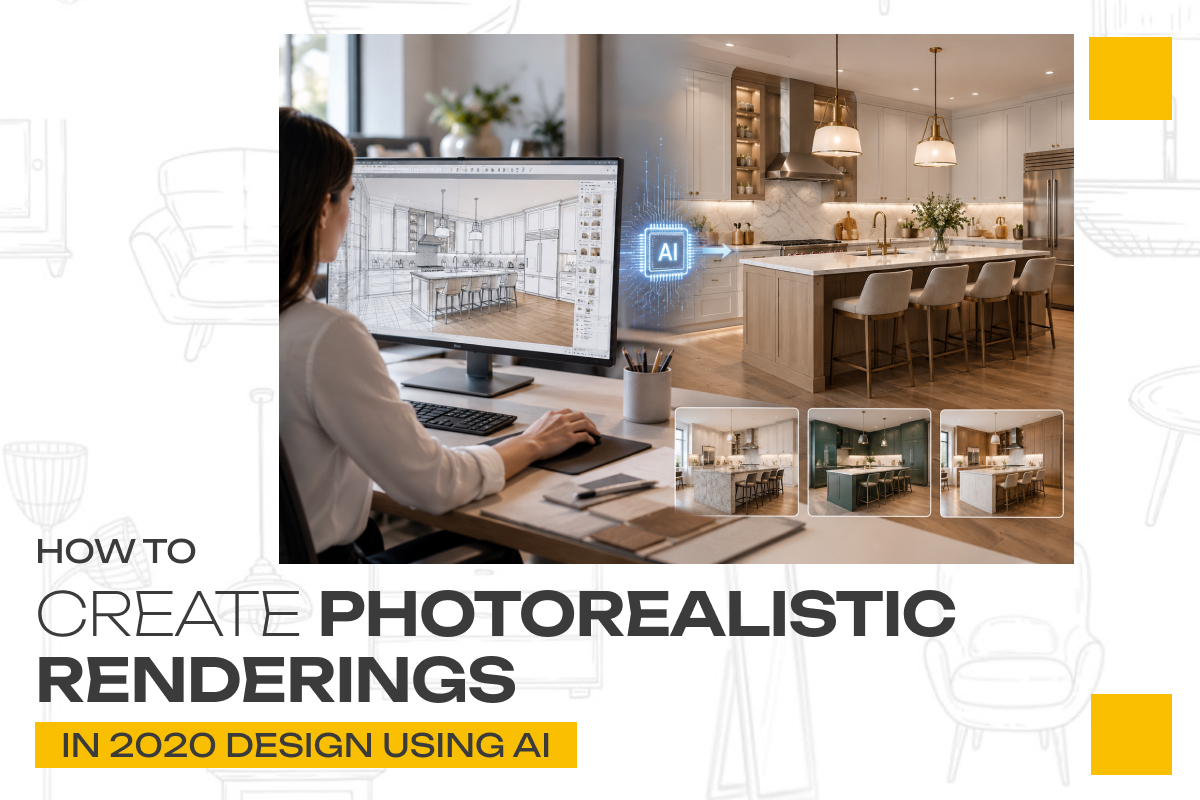
Platforms using AI in 2020 Design workflows, and they help professionals put together kitchen layouts faster, and usually with more accurate results. At the same time, they’re folding in pricing, catalogs, and product specs into one combined system.
Virtual Kitchen Planning is Becoming the New Standard
In fact, the advent of virtual kitchen planning has somewhat revolutionized the way in which homeowners and interior designers work together to develop their renovations projects. No longer reliant upon face-to-face meetings and crude sketches, the client is able to experiment with virtual kitchen designs through advanced visualization technology.
Contemporary AI in kitchen design software allows individuals to view the kitchen from within a 3D environment, test different colors and textures on the spot, and even make changes to the layout in no time before any construction occurs. This not only makes the design process more dynamic, but also increases its speed while reducing errors and unnecessary revisions. Furthermore, virtual planning makes remote team collaboration much easier.
Automation in Remodeling is Increasing Efficiency
Previously, the remodeling business was heavily dependent on manual coordination and paperwork. But now, through automation in remodeling, businesses are able to coordinate their operations effectively.
Some of the areas where automation can be applied in remodeling are:
- Project scheduling
- Material estimation
- Client communication
- Quote generation
- Workflow tracking
- Inventory control
Through automation of these operations, businesses will be able to reduce delays and increase productivity.
According to the Houzz State of AI report of 2025, the use of AI by professionals saved them more than three hours each week through increased productivity. (Kitchen & Bath Business)
It is evident from the above example that automation is becoming an advantage for businesses.
AI-Powered Personalization in Kitchen & Bath Design
The modern homeowner is looking for kitchens and bathrooms that have a certain level of customization that reflects his or her lifestyle and preferences, and also the functional requirements associated with it. All these can be done using AI-based technology that provides smart solutions and suggestions based on data, not just speculation.
AI technology can evaluate:
- Dimensions of the room
- User preferences
- Design preferences
- Lighting conditions
- Utilization patterns of the space
Based on the above analysis, the software will provide suggestions about the layout, material, color, and even appliance placement to improve the aesthetics and functionality of the room.
This level of customization helps designers to provide the best experience to the customer while reducing uncertainties in the process.
The Impact of AI on Designers and Remodeling Professionals
Earlier, there was a fear among many people that AI would deprive designers of their jobs; however, the contemporary use of the AI kitchen design industry focuses only on utilizing it to aid in creativity and efficiency. Contemporary AI in kitchen design software automates repetitive processes.
Experts in this field state that the best outcomes will be produced when automation and human skills work together in unison. While AI can contribute to increased efficiency and technical tasks, designers will continue to play an important role because of their creative approach, problem-solving skills, and communication abilities.
Challenges of AI in the Kitchen & Bath Industry
Despite the many advantages that come with the use of AI technology, there are some downsides to it as well.
These downsides are:
- Accuracy of software
- Understanding emotions and arts not present
- Possibility of repetitive design
- Learning curve for professionals
- Privacy concerns regarding data and systems
Although designs produced through AI are usually very aesthetically pleasing, they often neglect the technical aspect of construction or building regulations.
This is why human intervention is required in professional kitchens and bathrooms.
Industry Trend: Smart and Connected Design Ecosystems
The future of the industry will be such that there will be integration of design, sales, manufacturing, and installation processes through seamless collaboration.
In today’s world, the modern platforms comprise the following features:
- AI-assisted design
- Collaboration on the cloud
- Real-time rendering
- Product catalog
- Pricing algorithm
These changes are making kitchen and bath businesses more efficient and scalable.
According to market research, it has been predicted that the AI interior design industry will grow at a CAGR of more than 20% from 2023 to 2033. (Grand View Research)
Final Thoughts
Innovation due to AI and automation is revolutionizing the entire process of the kitchen and bath industry, starting from virtual kitchen planning to kitchen renovation automation. Thanks to those technological developments, firms working in this industry are becoming more productive, accurate, and satisfied with their customer relations.
The rapid development of the AI kitchen design industry proves how important it is to undergo digital transformation in order to succeed. Firms that have implemented technology and AI in kitchen design software are performing better than their competitors.
Nevertheless, although AI can increase efficiency, human expertise and creativity are needed in order to achieve success in kitchen and bath design.
If you want to find more about kitchen design software and industry news, please visit 2020 Kitchen Design.